
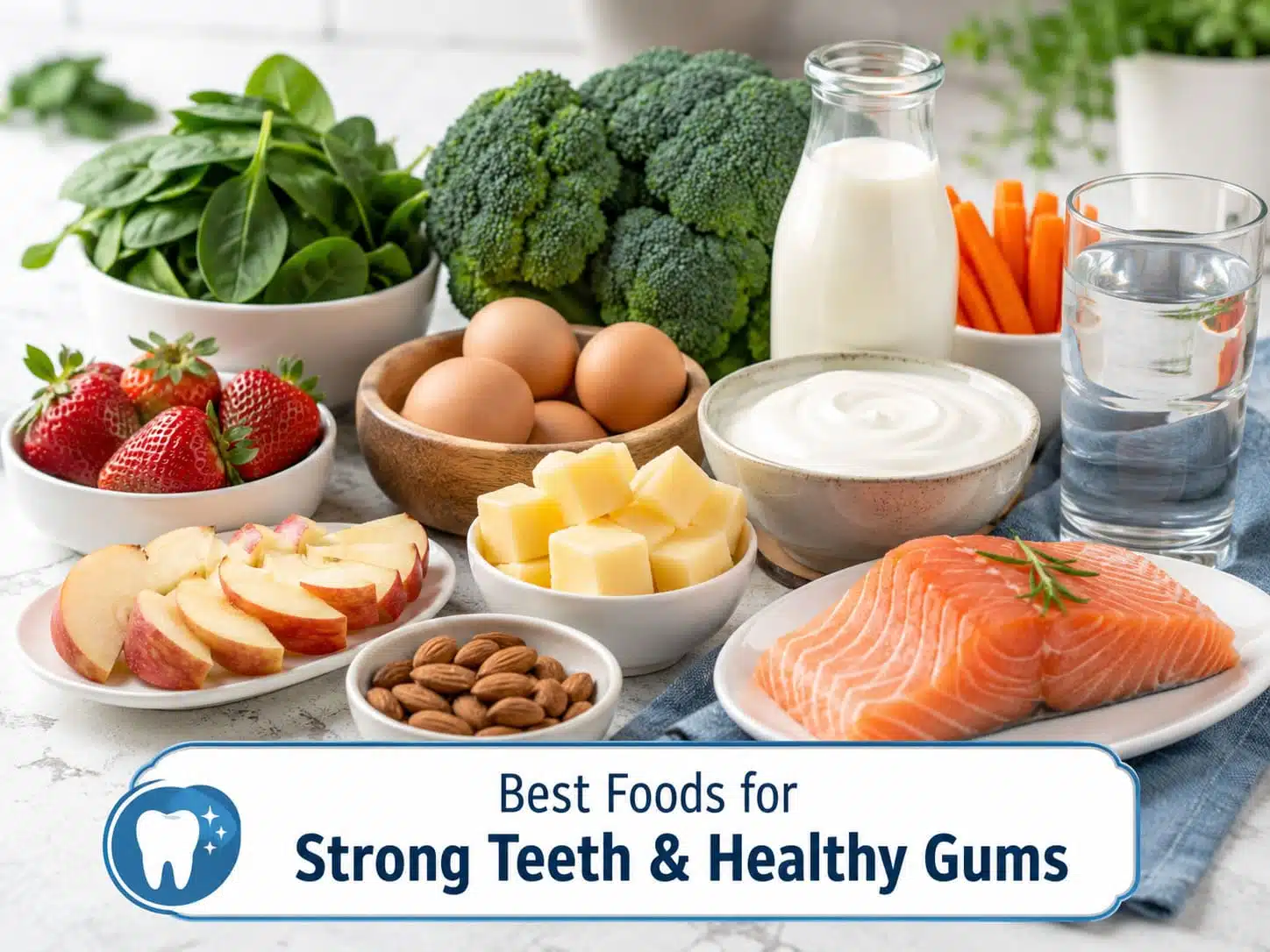
A healthy smile does not depend on brushing and flossing alone. What you eat every day also plays a major role in keeping your teeth strong, your gums healthier, and your mouth better protected against decay.
The best foods for strong teeth and gums are usually the same foods that support the rest of your body: mineral-rich, low in added sugar, and full of vitamins, protein, fiber, and water. These foods help support enamel, saliva flow, gum tissue, and the natural balance of bacteria in the mouth.
At Park Falls Dental in Ukiah, our team encourages patients to think of nutrition as part of preventive dental care. A good diet will not replace regular cleanings or exams, but it can make your home routine much stronger.
Why Food Matters for Oral Health
Your teeth and gums are exposed to everything you eat and drink. Sugary snacks, acidic drinks, and frequent grazing can feed harmful bacteria and increase the risk of cavities. On the other hand, nutrient-rich foods can support enamel strength, gum tissue, and saliva production.
Saliva matters because it helps wash away food particles and neutralize acids. Minerals such as calcium and phosphorus also help support strong enamel. Vitamin C supports healthy gum tissue, while protein helps the body repair and maintain tissues.
If you already visit our office for preventive care, routine dental cleanings can work together with better food choices to help protect your smile long term.
Dairy Foods for Stronger Enamel
Dairy foods are some of the most helpful choices for teeth because they often contain calcium and phosphorus. These minerals help support enamel, which is the hard outer layer that protects your teeth.
Good options include:
- Milk
- Plain yogurt
- Cheese
- Cottage cheese
- Unsweetened kefir
Cheese can be especially helpful because it may stimulate saliva flow. Plain yogurt can also be a smart option because it provides protein and calcium without the added sugar found in many flavored yogurts.
Try to choose unsweetened or low-sugar versions when possible. A yogurt that sounds healthy can still contain a lot of sugar, which may work against your dental goals.
Crunchy Fruits and Vegetables
Crunchy fruits and vegetables can help stimulate saliva and gently clean the teeth while you chew. They are not a substitute for brushing, but they are much better snack choices than sticky candy, chips, or cookies.
Smile-friendly options include:
- Apples
- Carrots
- Celery
- Cucumbers
- Pears
- Bell peppers
These foods also provide fiber and water, which can help your mouth feel cleaner between meals. Celery and carrots are good examples because they require chewing and do not cling to teeth the way sticky snacks do.
If you have dental sensitivity, braces, dentures, or recent dental work, ask our team which textures are safest for you.
Leafy Greens and Vegetables
Leafy greens are a strong choice for gum and tooth support because they offer vitamins and minerals without much sugar. Spinach, kale, collard greens, romaine lettuce, and Swiss chard can all fit into a smile-friendly diet.
These foods may provide calcium, folate, and other nutrients that support oral and overall health. They are also easy to add to meals. You can put spinach in eggs, add greens to soups, blend them into smoothies, or use them as a base for salads.
A balanced diet also supports the kind of preventive care we provide through general dentistry in Ukiah, where the goal is to catch problems early and help patients maintain healthier smiles over time.
Protein-Rich Foods
Protein helps support tissue repair and overall health, which matters for your gums and oral tissues. Many protein-rich foods also contain minerals that support teeth.
Good choices include:
- Eggs
- Fish
- Chicken
- Turkey
- Beans
- Lentils
- Tofu
- Nuts and seeds
Fish can be especially useful because many types contain vitamin D and healthy fats. Vitamin D helps the body use calcium properly, which is important for bones and teeth.
Nuts and seeds can also be helpful, but choose carefully if you have dental work, braces, or weak teeth. Very hard nuts can crack teeth or damage restorations if you bite down the wrong way.
Foods Rich in Vitamin C
Vitamin C supports healthy gums. Without enough vitamin C, gum tissue may become more vulnerable to irritation and slower healing.
Good sources include:
- Oranges
- Strawberries
- Kiwi
- Bell peppers
- Broccoli
- Brussels sprouts
- Tomatoes
Citrus fruits can be healthy, but they are also acidic. That does not mean you need to avoid them. It just means you should eat them with meals, drink water afterward, and avoid brushing immediately after acidic foods or drinks.
The American Dental Association explains that nutrition affects oral tissues and that calcium is important for maintaining healthy teeth and bones. MouthHealthy also notes that a balanced, low-sugar diet can support stronger teeth and gums.
Water: The Most Underrated Smile-Friendly Choice
Water is one of the simplest things you can choose for better oral health. It helps rinse food particles from the mouth, supports saliva, and does not feed cavity-causing bacteria.
If you drink soda, sweet tea, energy drinks, or sports drinks often, replacing some of them with water can make a noticeable difference. Sugary drinks bathe the teeth in sugar and acid, especially when sipped throughout the day.
For many patients, improving oral health starts with small habits. Drinking more water, limiting sugary snacks, and eating more whole foods can support your dental visits and home care routine.
Foods to Limit for Healthier Teeth and Gums
Knowing the best foods for strong teeth and gums is helpful, but it is just as important to know what to limit.
Be careful with:
- Sticky candy
- Soda
- Sweet tea
- Energy drinks
- Sports drinks
- Cookies and pastries
- Dried fruit
- Frequent snacking
- Acidic drinks
- Very hard foods that may damage teeth
You do not have to be perfect. The bigger issue is frequency. Eating something sweet once with a meal is different from sipping soda or snacking on candy all day.
How to Build a Smile-Friendly Plate

A good oral-health plate does not need to be complicated. Aim for a mix of protein, vegetables, fiber-rich carbohydrates, and water. Add dairy or another calcium-rich food when it fits your diet.
For example, a smile-friendly meal might include grilled chicken, leafy greens, brown rice, water, and plain yogurt. A better snack might be cheese and apple slices, hummus with soft vegetables, or nuts if they are safe for your teeth.
If you have concerns about stains, tooth wear, sensitivity, or missing teeth, our dental services in Ukiah can help you understand what your smile needs beyond diet alone.
A Healthy Diet Still Needs Dental Care
Food choices matter, but they do not replace professional dental care. Even patients with excellent diets can still develop tartar buildup, cavities, gum inflammation, or cracked teeth.
Regular exams and cleanings help remove buildup that brushing misses and allow our team to catch small concerns before they become more serious. A strong diet, good brushing, daily flossing, and routine dental visits all work together.
Support Your Smile With Park Falls Dental
The best foods for strong teeth and gums can support your enamel, gums, and long-term oral health. But if you want to protect your smile fully, pair good nutrition with regular preventive care. Schedule a visit for a cleaning, exam, or personalized dental care.
Frequently Asked Questions
What foods make teeth stronger?
Foods rich in calcium, phosphorus, protein, and vitamin D can help support strong teeth. Good options include cheese, milk, yogurt, eggs, fish, nuts, seeds, beans, and leafy greens.
What foods are best for healthy gums?
Foods high in vitamin C, antioxidants, and protein can support healthier gums. Strawberries, oranges, bell peppers, broccoli, leafy greens, eggs, fish, and beans are good examples.
Is fruit good for teeth?
Yes, many fruits can be part of a healthy diet. Crunchy fruits like apples and pears can be good snack choices. Acidic fruits like oranges are healthy too, but it helps to drink water afterward and avoid constant snacking.
What drinks are best for teeth?
Water is the best everyday drink for teeth. Milk can also support enamel because it contains calcium. Sugary and acidic drinks should be limited because they can increase cavity and enamel wear risk.
Are nuts good for teeth?
Nuts can provide minerals, protein, and healthy fats, but very hard nuts should be eaten carefully. If you have dental restorations, braces, or weak teeth, ask your dentist which foods are safest.
Can diet prevent cavities?
A healthy diet can lower cavity risk, especially when it is low in added sugar and paired with brushing, flossing, fluoride, and regular dental visits. Diet helps, but it does not replace dental care.